
AI and Automation Are Reshaping Workplaces
Artificial intelligence (AI) and automation are transforming workplaces at an unprecedented pace, redefining how businesses operate, how employees work, and the skills that will be most valued in the years ahead. In 2026, organizations across industries are integrating AI-powered tools and automated systems into everyday workflows, from customer service and data analysis to manufacturing and supply chain management. These technologies are not just improving efficiency—they are fundamentally changing the nature of work, shifting responsibilities, and creating new opportunities while challenging traditional employment structures. The combination of AI and automation is shaping a workplace environment that is faster, more adaptive, and increasingly dependent on human-machine collaboration.
One of the most visible impacts of AI and automation is the enhancement of productivity. Routine, repetitive, and time-consuming tasks that once required significant human effort are now being handled by intelligent systems. In sectors like finance, accounting, and administrative services, AI algorithms can process vast amounts of data, generate reports, and even detect anomalies far more quickly than human workers. Similarly, in manufacturing, automated robots handle assembly, quality control, and inventory management, reducing error rates and streamlining operations. By relieving employees from mundane tasks, organizations can focus human resources on strategic, creative, and decision-making activities, increasing overall productivity and allowing for more innovative work.
AI is also transforming decision-making processes in workplaces. Advanced machine learning models can analyze complex datasets, identify trends, and provide predictive insights that inform business strategy. For example, in marketing, AI tools can evaluate consumer behavior, segment audiences, and optimize campaigns in real time. In healthcare, AI-powered diagnostic tools assist clinicians by analyzing medical images or patient data, enabling faster and more accurate treatment decisions. By augmenting human judgment, AI allows employees to make data-driven decisions more efficiently, resulting in improved outcomes and reduced operational risks.
The integration of AI and automation is also reshaping the employee experience. Intelligent systems are being deployed to handle customer inquiries, schedule meetings, and manage routine communications, enabling employees to dedicate more time to high-value tasks. Virtual assistants and chatbots enhance internal communication, streamline workflows, and reduce administrative burdens, allowing teams to operate more efficiently. Moreover, AI-powered learning platforms are providing personalized training and development programs, helping employees adapt to new technologies and acquire skills that will be critical for future roles. This emphasis on continuous learning is essential as the workplace evolves in response to automation and AI.
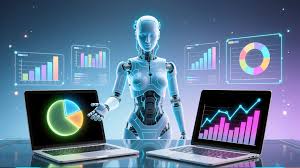
How AI and Automation Are Reshaping Workplaces in 2026
While AI and automation offer significant benefits, they also raise questions about workforce displacement and skill requirements. Certain roles, particularly those involving repetitive, low-complexity tasks, are increasingly susceptible to automation. At the same time, demand for employees with expertise in AI management, data analysis, programming, and human-AI collaboration is growing. Organizations are responding by reskilling and upskilling employees, investing in professional development programs that equip workers with the skills needed to thrive in an AI-driven environment. The shift underscores the importance of adaptability and lifelong learning as central components of career success in 2026.
Collaboration between humans and machines is becoming a defining feature of modern workplaces. Rather than viewing AI and automation purely as replacements for human labor, many organizations are leveraging these technologies to complement human capabilities. In creative fields such as design, content creation, and product development, AI tools assist with ideation, pattern recognition, and rapid prototyping, enabling humans to focus on strategic thinking and innovative problem-solving. In logistics and supply chain management, automated systems optimize routes, forecast demand, and manage inventory, while human employees handle negotiation, strategy, and relationship management. This hybrid approach maximizes efficiency while maintaining the human judgment, empathy, and creativity that machines cannot replicate.
The impact of AI and automation is also shaping workplace culture and organizational structures. Remote work, virtual collaboration, and flexible schedules are increasingly supported by AI-powered productivity tools and project management platforms. Predictive analytics are helping managers understand team performance and allocate resources more effectively, while intelligent monitoring tools track workflow efficiency without being overly intrusive. These technological changes are enabling more agile, responsive, and data-informed workplaces, where decision-making is informed by real-time insights and operations can adapt quickly to market or environmental changes.
Ethical considerations are central to the implementation of AI and automation. As organizations deploy AI-driven systems, they must ensure transparency, fairness, and accountability. Algorithmic bias, privacy concerns, and the potential for misuse of automated systems require careful management, regulatory oversight, and the establishment of best practices. Companies that prioritize ethical AI practices not only reduce risks but also foster trust among employees, customers, and stakeholders, creating a more sustainable and responsible workplace environment.
In conclusion, AI and automation are reshaping workplaces in 2026 by enhancing productivity, augmenting decision-making, and enabling a new model of human-machine collaboration. These technologies are freeing employees from routine tasks, providing data-driven insights, and fostering innovative approaches to problem-solving. At the same time, they are redefining skill requirements, prompting reskilling efforts, and reshaping workplace culture. As organizations continue to integrate AI and automation thoughtfully and ethically, the future of work will be characterized by adaptability, efficiency, and collaboration, with humans and machines working together to achieve outcomes that were previously unimaginable. The evolution of workplaces driven by AI and automation represents not just a technological shift, but a fundamental transformation in how work is conceived, organized, and executed.
