
exchange for AI agents improve efficiency in business
In today’s rapidly evolving digital economy, artificial intelligence has emerged as a transformative force in the way businesses operate, make decisions, and compete. One of the most significant innovations within AI systems is the concept of autonomous agents—software entities capable of perceiving their environment, reasoning, and taking action without constant human oversight. Among the many advantages these agents offer, the process of exchange for AI agents is proving to be a powerful mechanism for improving efficiency in business operations.
Exchange for AI agents refers to the ability of these autonomous systems to communicate, negotiate, and share resources or information with one another to achieve common or individual objectives. This capability introduces a dynamic and collaborative layer to business processes, where AI agents can distribute workloads, optimize resource allocation, and reduce redundancies across departments or even between organizations. When implemented effectively, this results in streamlined workflows, faster decision-making, and significant cost savings.
For example, in supply chain management, AI agents representing different entities—suppliers, manufacturers, distributors, and retailers—can engage in continuous exchange. They share data on inventory levels, production schedules, and customer demand in real time. This synchronization helps in reducing stockouts, minimizing overproduction, and ensuring timely deliveries. The exchange for AI agents allows the entire supply chain to operate more cohesively, adapting quickly to changes and disruptions with minimal human intervention.
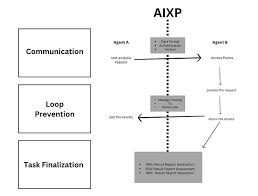
How does exchange for AI agents improve efficiency in business?
In customer service, AI agents deployed across various platforms—chatbots, recommendation engines, and sentiment analyzers—can collaborate by exchanging user behavior data and contextual insights. This enables a more personalized and efficient customer experience. An AI chatbot, for instance, can instantly access purchase history and preferences through an exchange with a recommendation engine, leading to quicker resolutions and higher customer satisfaction. Such efficiency not only saves time but also enhances the overall quality of service.
Financial institutions also benefit from this exchange model. AI agents can monitor market trends, assess credit risks, and manage portfolios. By exchanging insights, risk models, and market signals, these agents can respond to economic changes in real time, reducing exposure and maximizing returns. The increased efficiency comes from the agents’ ability to analyze vast datasets collaboratively, far beyond the capacity of individual human analysts.
Furthermore, the exchange for AI agents fosters innovation by creating a decentralized intelligence network. Instead of relying on siloed systems, businesses can deploy AI agents that draw from a shared pool of knowledge and capabilities. This encourages flexibility, reduces downtime, and accelerates innovation cycles. When AI agents collaborate across product development, marketing strategies, and operational logistics, businesses can adapt and scale with greater agility.
Importantly, this system also leads to better utilization of computational resources. AI agents can negotiate to share cloud computing power, data storage, or specialized algorithms, ensuring that no system is underutilized or overwhelmed. This not only reduces operational costs but also contributes to sustainability by minimizing energy waste.
Overall, the exchange for AI agents enhances business efficiency by fostering collaboration, optimizing resource use, and enabling rapid, data-driven decisions. As AI continues to integrate more deeply into business ecosystems, leveraging the power of intelligent agent exchange will be key to staying competitive and future-ready.
